
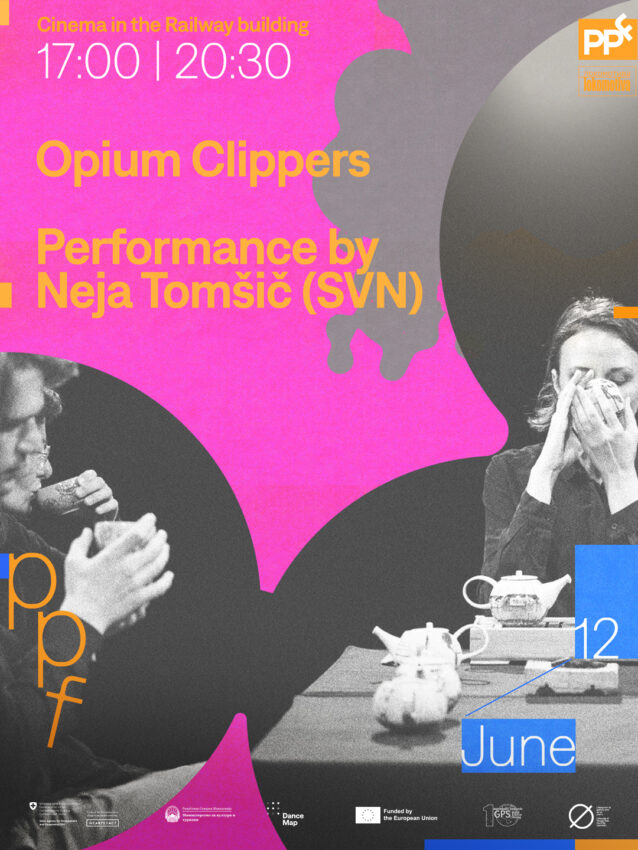
12.06.2026 | 17:00 & 20:30
Киното во Железничката зграда / Cinema in the railway building
Достапни се места за изведбата во 20:30 ч. Бројот на седишта е лимитиран на 10, затоа задолжителна е претходна пријава на следниот линк: https://forms.gle/yeFCSNjZTcDrXULq5
Местата ќе бидат распределени според принципот: кој прв се пријави.
Places are available for the 20:30 performance. The number of seats is limited to 10, therefore registration is required through the following link:
https://forms.gle/yeFCSNjZTcDrXULq5
Seats will be allocated on a first-come, first-served basis.
///English below///
“It was necessary to create an opium epidemic in Asia.
Europeans, in particular British traders, did not plan this from
the outset and they did not act necessarily from malicious
intent. Nevertheless, a drug epidemic was begun and
promoted, and it was done because it was profitable. It s in
the creation of the opium trade that we can see the invisible
hand of capitalism at work.”
- Karl A. Trocki: Opium, Empire and the Global Political Economy: A study of the Asian opium trade 1750 – 1950
Opium Clippers е визуелен есеј од рачно насликана керамика и нарација. Тоа е чајна церемонија низ која нè водат приказните за петте едреници за пренос на опиум, што ја раскажуваат историјата на трговијата со опиум и чај во Кина во втората половина на 18 и 19 век. Приказните за бродовите не само што ги откриваат меѓународните конфликти, колонизацијата и развојот на консумеризмот, туку отвораат и простор за размислување за длабоките последици што трговијата со чај и опиум ги има врз нашето време.
Проектот Opium Clippers на Неја Томшич е активен од 2017 година. Претставен е во 13 земји со повеќе од 100 изведби.
Во 2018 година проектот прераснува во уметничка книга „Opium Clippers“ во издание на Rostfrei Publishing, и ја добива наградата за најдобра уметничка книга за 2017/2018 година, како и наградата на Словенечкиот саем на книгата за најубаво дизајнирана книга во категоријата „Книга како објект“.
Изведбата е на аглиски јазик. Времетраењето е 90 минути, по што следува разговор со публиката.
Концепт и изведба: Неја Томшич
Керамика: Ања Слапничар
Музика: Гашпер Торкар
Извршна продукција: Барбара Почек
Продукција: Gledališče Glej и Неја Томшич
Продукција до 2018 година: МоТА – Музеј на транзиторни уметности
Медиумски осврти:
„Томшич воспоставува исклучителен баланс помеѓу раскажувањето и содржината, кој е присутен и во секое нејзино движење, во секое подигнување на чајникот и во секој допир на површината на одредена слика. Opium Clippers е уникатно искуство, кое ве остава со блага насмевка, мирен ум и детално познавање на прекуокеанската колонијална трговија од минатите векови.“
– Александра Ратајова, Loutkar
„Огромниот материјал што Неја го собра за опиумските војни прерасна во уметничка порака. Одеднаш се споија нејзината дистанца кон темата и поврзаноста што се создаде меѓу нас, љубителите на чај. На крајот имав чувство како да пијам напивка од минатото.“
– Зорана Баковиќ, Delo
Изразуваме благодарност до Факултетот за работи што не се учат (ФРУ) за поддршката преку отстапување простор за реализација на програмата.
Перформанс Платформа фестивалот 2026 – пролетна едиција е активност поддржана во рамки на проектот „Култура за развој“ на Владата на Швајцарија, кој се имплементира од Хартефакт Фонд; Министерството за култура и туризам на Република Северна Македонија; проектот Dance Map кој добива финансиска поддршка од Програмата за истражување и иновации на Европската Унија – Horizon Europe и од програмата GPS/Global Practice Sharing на Movement Research, како дел од сезоната по повод 10-годишнината на GPS, со поддршка од Trust for Mutual Understanding. Содржината/изразените мислења во овој текст никогаш не можат да се толкуваат како ставови на донаторите.
///
“It was necessary to create an opium epidemic in Asia.
Europeans, in particular British traders, did not plan this from
the outset and they did not act necessarily from malicious
intent. Nevertheless, a drug epidemic was begun and
promoted, and it was done because it was profitable. It s in
the creation of the opium trade that we can see the invisible
hand of capitalism at work.”
- Karl A. Trocki: Opium, Empire and the Global Political Economy: A study of the Asian opium trade 1750 – 1950
Opium Clippers is a visual essay with painted ceramics and narration. It’s a tea ceremony through which we are guided by the stories of the five Opium Clippers, which tell the history of the opium and tea trade in the 2nd half of the 18th and 19th centuries in China. The stories of the ships do not only conceal international conflicts, colonisation and the development of consumerism, but also give rise to a reflection on the profound implications of the tea and opium trade for our times.
Neja Tomšič has been running Opium Clippers since 2017. They have been hosted in 13 countries and have had over 100 iterations.
In 2018, the project evolved into an artist’s book, Opium Clippers, published by Rostfrei Publishing, which won the Best Artist’s Book Award 2017/2018 and the Slovenian Book Fair Award for the Most Beautifully Designed Book in the Book as Object category.
The language of the performance is English. The performance is 90 minutes long, followed by a discussion with the audience.
Concept, painting and performance: Neja Tomšič
Cheramics: Anja Slapničar
Music: Gašper Torkar
Executive production: Barbara Poček
Produced by: Gledališče Glej and Neja Tomšič
Produced by MoTA – Museum of Transitory Art until 2018
Press mentions:
“Tomšič establishes an exceptional balance between storytelling and content, also contained in her every movement, in every lifting of the teapot and by running her finger over a specific painting. The Opium Clippers is simply a unique experience, which leaves you with a gentle smile, a calm mind and detailed knowledge of the overseas colonization trade of past centuries.”
– Alexandra Ratajová, Loutkar
“The immense amount of information on the opium wars that Neja collected
became a carrier of an artistic message. Suddenly, Neja’s distance to her topic
and the connection that was established between us, tea drinkers, merged.
In the end I felt as if I was drinking a potion from the past.”
– Zorana Baković, Delo
We extend our gratitude to the Faculty of things that can’t be learned for their generous support in providing space for the programme.
Performance Platform festival 2026 – Spring Edition is an activity in the frame of the Swiss project Culture for Development implemented by Heartefact Fund; Ministry of culture and tourism of the Republic of North Macedonia; the project Dance Map that receives funding from the European Union Research and Innovation Programme – Horizon Europe and the GPS/Global Practice Sharing Program at Movement Research, as part of the GPS 10th Anniversary Season, with funding from the Trust for Mutual Understanding. The content/opinions can in no way be considered to reflect the views of the donors.